Flight Canceled? Know Your Rights in Europe vs. the United States
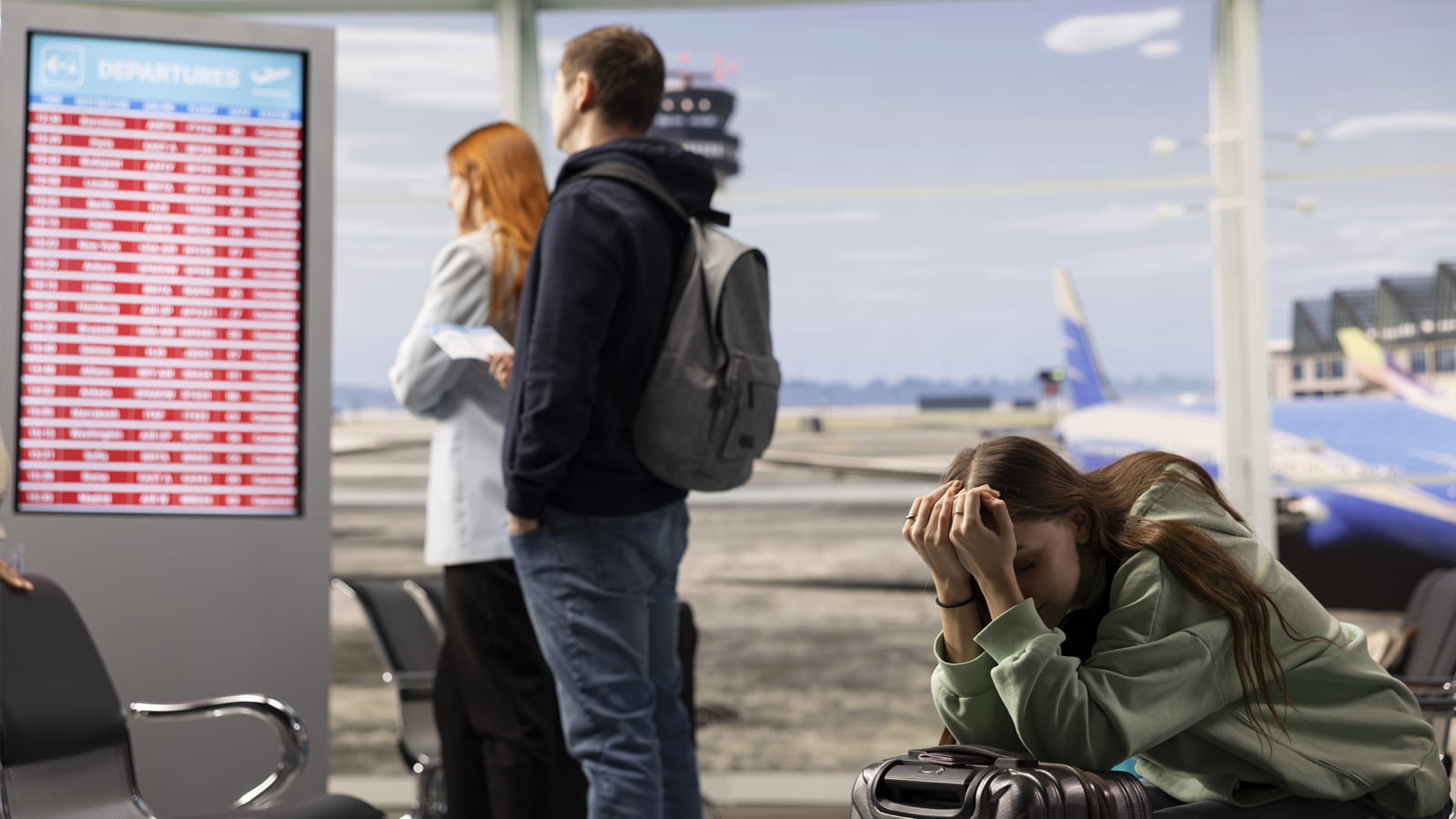
You’re at the airport, with your suitcase packed, your passport in hand, and your excitement through the roof. Suddenly, the screen flashes and the word every traveler fears appears: CANCELED. Your heart sinks, and in a matter of seconds, the line at the check-in counter turns into a battlefield. Does this sound familiar?
Dealing with a flight cancellation is one of the most stressful experiences of traveling. However, the difference between an absolute nightmare and a manageable inconvenience comes down to one thing: knowing your rights. Laws vary drastically depending on where in the world you are. While in the European Union the focus is on compensating you for the inconvenience, in the United States the priority is to refund your money quickly and transparently. Here, I’ll outline both sets of regulations so you know exactly what to demand on your next trip.
1. European Union: EC Regulation 261 and a Haven for Passenger Protection
The European Union has the most robust passenger protection legislation in the world. If your flight is canceled, the airline has strict obligations that go far beyond simply offering you another seat.
- Who does this law protect?: It applies to all passengers departing from any airport located within the EU (regardless of the airline’s nationality). It also protects passengers arriving in the EU from a non-EU country, provided the flight is operated by an EU airline (of European origin).
- The 14-Day Rule: If the airline notifies you of the cancellation less than 14 days before the departure date, you are automatically entitled to financial compensation, unless they can prove that the cancellation was due to “extraordinary circumstances” (such as extreme weather conditions, air traffic controller strikes, or political instability). It’s crucial to know that technical malfunctions of the aircraft or low occupancy rates are not considered extraordinary circumstances; if they cancel for those reasons, they must compensate you.
- Fixed cash compensation: Unlike in other countries, in Europe compensation does not depend on the price you paid for the ticket, but rather on the flight distance:
– €250 for short-haul flights (up to 1,500 km).
-€400 for medium-haul flights (between 1,500 and 3,500 km).
-€600 for transatlantic or long-haul flights (more than 3,500 km).
- The Right to Assistance: If you agree to be rebooked on another flight and have to wait for hours (or spend the night), the airline is required by law to provide you, free of charge, with: sufficient food and drink, two phone calls or emails, hotel accommodations if you need to stay overnight, and round-trip transportation between the airport and the hotel.
2. United States: The New DOT Rules and the Culture of Refunds
Historically, U.S. laws were much more lenient toward businesses. However, thanks to recent regulations from the Department of Transportation (DOT), the rules of the game have changed substantially, placing a focus on financial transparency and the speed of refunds.
- Automatic and cash refunds: In the U.S., there are no fixed compensation amounts for emotional distress or lost time, as there are in Europe. However, the law is strict regarding refunds: if your flight is canceled for any reason—including adverse weather—and you decide not to accept the alternative itinerary offered by the airline, you are automatically entitled to a 100% refund. The law explicitly prohibits airlines from forcing you to accept travel credits or vouchers if you prefer a cash refund. The refund must be issued within a maximum of 7 business days if you paid by credit card.
- What about significant delays?: The same automatic refund rules apply if your flight is significantly delayed and you decide not to travel. The DOT defines a significant delay by law as: 3 hours or more for domestic flights and 6 hours or more for international flights.
- The fine print on assistance in the U.S.: Unlike the strict European regulations, there is no federal law in the U.S. requiring airlines to pay for hotels or meals if the cancellation is due to causes beyond the airline’s control (such as storms). However, most major airlines have voluntarily committed to covering these expenses through their contracts of carriage if the cancellation is their direct responsibility (for example, a shortage of crew or maintenance issues).
3. Head-to-Head: A Comparative Overview for Your Next Trip
|
Situation or Benefit
|
European Union (Regulation (EC) No. 261)
|
United States (DOT Regulations)
|
|
Am I entitled to a refund?
|
Yes, if you choose not to travel after the cancellation.
|
Yes, it’s automatic, and you must pay in cash if you decline the change.
|
|
Additional financial compensation
|
Yes, from €250 to €600 depending on the distance (if you’re notified less than 14 days in advance).
|
No. There are no cash penalties in favor of the passenger.
|
|
Does the reason for the delay matter?
|
Yes. Bad weather exempts them from paying extra compensation, but not from providing assistance.
|
No. Whatever the reason, if the flight is canceled, you’ll get a refund.
|
|
Hotel, meals, and transportation
|
It is required by law if you are reassigned and must wait.
|
It depends on the airline and whether the problem was its fault.
|
- Don’t rush to sign vouchers: Airports often offer travel vouchers right away. Always ask if you’re entitled to assisted rebooking or a cash refund before accepting.
- Document absolutely everything: Take screenshots of the airline’s app, photograph the airport screens showing the flight status, and request a written explanation of the reason for the cancellation at the counter.
- Keep your receipts: If the European airline doesn’t provide you with hotel or meal vouchers right away, you can pay for them yourself and request a refund later. Keep every official receipt.
I hope this information is useful and helpful to you. I wish you a happy trip.